
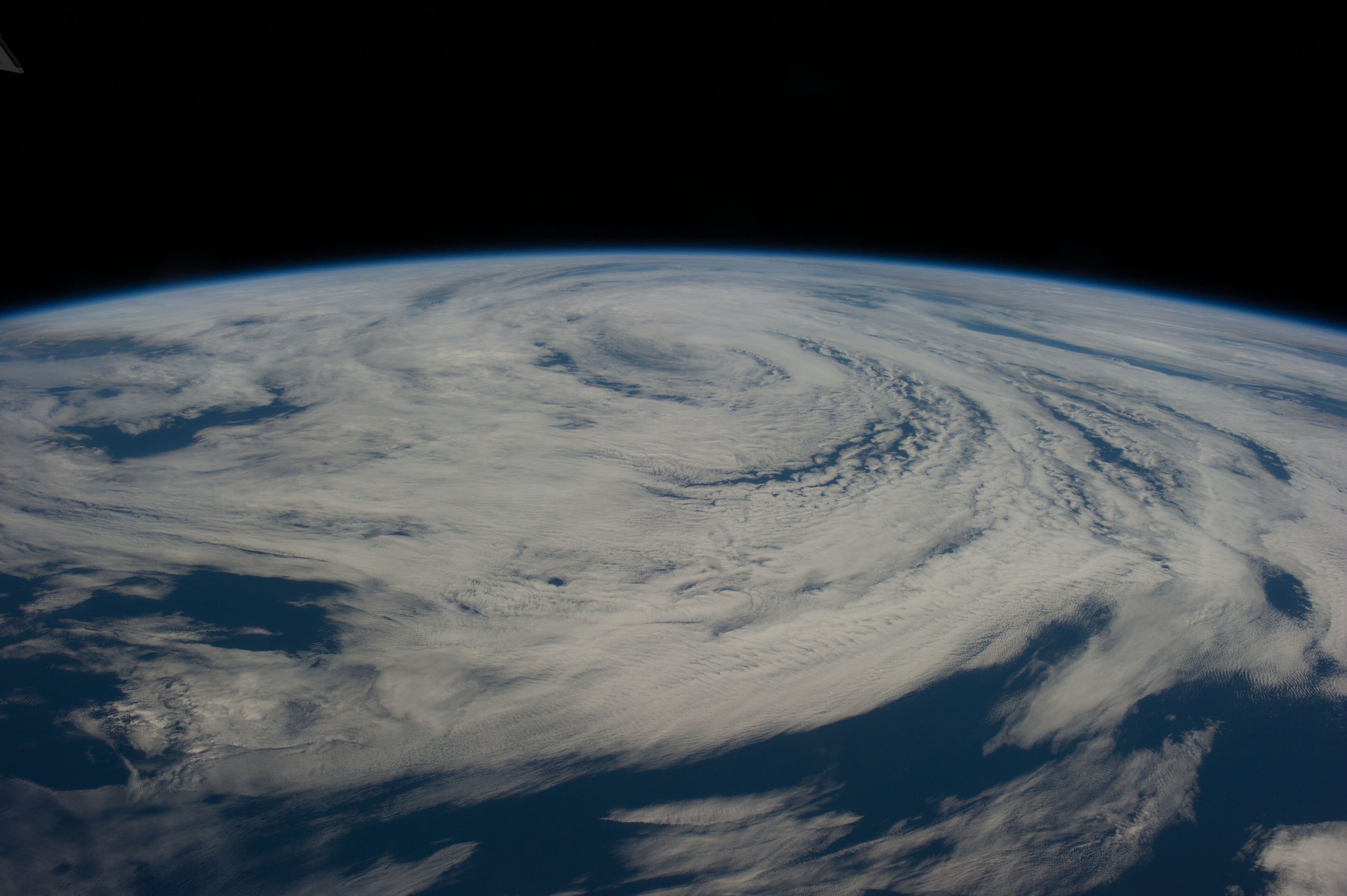

This line studies the role of the ocean and its interaction with the atmosphere in the dynamics of the climate system, as well as their environmental impacts.
We analyse the exchange and transport of moisture, heat and energy and their influence on climate variability, on the occurrence of extreme events such as droughts and heavy precipitation, and on their impacts on ecosystems. The line thus focuses on the physical and thermodynamic processes that link ocean and atmospheric variability with the occurrence, intensification and persistence of extreme climate events. In particular, it examines the mechanisms by which sea surface temperature and salinity anomalies, atmospheric circulation patterns, moisture transport and changes in the energy balance modulate phenomena such as droughts, cyclones, atmospheric rivers, heavy precipitation and heatwaves.
The approach combines observational analysis, climate and hydrological modelling and advanced statistical tools to identify relationships across spatial and temporal scales. The results improve our understanding of the mechanisms that control climate extremes, their physical attribution and their potential impact on water resources, ecosystems, the economy and society. The aim is to advance the understanding of these processes and to assess how they may change in a context of global change, as well as their implications for climate and environmental risks.
Researchers
- Milica Stojanovic (coordinator). EPhysLab. Xunta de Galicia grant to complete postdoctoral training, until 2027.
- Albenis Pérez Alarcón (coordinator). EPhysLab. Xunta de Galicia postdoctoral grant, until 2027.
- Jorge Eiras Barca. EPhysLab. Ramón y Cajal fellowship, until 2030.
- Rogert Sorí Gómez. EPhysLab. Ramón y Cajal fellowship, until 2027.
Techniques and services we offer
- Downscaling techniques (WRF modelling) to improve the resolution of global climate models. Several climate variables available at high resolution, and the possibility of processing new variables of interest.
- Lagrangian modelling of atmospheric moisture transport with FLEXPART, and advice on assessing extremes and hydroclimatic risks under climate change scenarios.
- Scientific and technical advice on identifying and analysing extreme hydrometeorological events (droughts, floods, extreme precipitation and heatwaves) and their associated atmospheric mechanisms.
Selected publications
- Pérez-Alarcón, A., Coll-Hidalgo, P., Fernández-Álvarez, J. C., Trigo, R. M., Nieto, R., & Gimeno, L. (2023). Impacts of tropical cyclones on the global water budget. npj Climate and Atmospheric Science, 6, 212. https://doi.org/10.1038/s41612-023-00546-5
- Gimeno, L., Vázquez, M., Eiras-Barca, J., Sorí, R., Stojanovic, M., Algarra, I., Nieto, R., Ramos, A. M., Durán-Quesada, A. M., & Dominguez, F. (2020). Recent progress on the sources of continental precipitation as revealed by moisture transport analysis. Earth-Science Reviews, 201, 103070. https://doi.org/10.1016/j.earscirev.2019.103070
- Stojanovic, M., Pérez-Alarcón, A., Sorí, R., Nieto, R., & Gimeno, L. (2026). Atmospheric rivers are associated with nine out of every 10 floods in major global river basins. npj Natural Hazards, 3, 6. https://doi.org/10.1038/s44304-026-00167-x